briggs and stratton 17.5 hp engine manual
Briggs & Stratton’s 17.5 HP engine, like the 31G700 series, is a workhorse powering various outdoor equipment. Manuals (like MS-0635-11-98) offer crucial guidance for owners and technicians.
Engine Overview and Common Applications
The Briggs & Stratton 17.5 HP engine, frequently found in the INTEK series (like the 31G700), represents a robust and reliable power source for a diverse range of applications. Commonly, these engines drive lawnmowers, pressure washers, and various types of garden equipment. Their vertical shaft, opposed twin configuration contributes to balanced operation and reduced vibration.
Access to a comprehensive parts manual, such as the 42A700 to 42A799 series manual available on platforms like eBay (identified as MS-0635-11-98), is invaluable. These manuals detail the engine’s internal workings and aid in identifying specific components. Understanding the engine’s design, as outlined in downloadable PDF manuals, is essential for effective maintenance and repair, ensuring longevity and optimal performance across its many uses.
Safety Precautions and Warnings
Prior to any operation, maintenance, or repair involving a Briggs & Stratton 17.5 HP engine, consulting the official engine manual is paramount. These manuals emphasize crucial safety procedures, including disconnecting the spark plug wire to prevent accidental starting. Always allow the engine to cool completely before servicing.
Fuel handling requires extreme caution; avoid spills and ensure adequate ventilation. Never operate the engine in enclosed spaces due to the risk of carbon monoxide poisoning. Protective eyewear and gloves are recommended during all maintenance tasks. A detailed parts manual (like MS-0635-11-98) doesn’t replace safety guidelines, but aids in correct component handling. Ignoring warnings can lead to severe injury.

Engine Specifications
The Briggs & Stratton 17.5 HP engine, often a 31G700 series, has specific horsepower, torque, and dimensional details outlined in its manual.
Model Series Identification (e.g., 31G700)
Identifying the correct Briggs & Stratton model series is paramount for accurate parts ordering and maintenance. The 17.5 HP engine frequently falls within the 31G700 series, but variations exist, such as those ranging from 42A700 to 42A799 as noted in available parts manuals.
Locating the model, type, and code is typically found on the engine’s valve cover or blower housing. These alphanumeric codes are crucial when consulting a parts manual (like MS-0635-11-98) or seeking assistance from a supplier. Accurate identification ensures compatibility and prevents incorrect part purchases, streamlining repairs and maximizing engine longevity. Referencing the engine manual is always recommended for precise location and interpretation of these codes.
Horsepower and Torque Ratings
The Briggs & Stratton 17.5 HP engine delivers a substantial power output for its size, making it suitable for a wide range of applications. While advertised as 17.5 horsepower, actual performance can vary slightly based on operating conditions and engine load.
Torque ratings, often specified in foot-pounds, indicate the engine’s rotational force. These figures are critical for understanding the engine’s ability to handle demanding tasks. Consulting the specific engine manual (referenced as MS-0635-11-98 in parts listings) provides precise horsepower and torque curves, enabling informed decisions regarding equipment selection and usage. Understanding these ratings ensures optimal performance and longevity.
Dimensional Specifications
Accurate dimensional data is vital when replacing a Briggs & Stratton 17.5 HP engine or integrating it into new equipment. The engine’s physical size – length, width, and height – dictates compatibility with mounting structures and surrounding components.
Detailed specifications, often found within the engine’s parts manual (such as MS-0635-11-98), outline precise measurements for critical areas like the crankshaft output shaft, mounting bolt patterns, and overall engine footprint. These dimensions ensure proper fitment and prevent interference during installation. Referencing the manual guarantees correct measurements for successful integration and avoids costly modifications.
Understanding the Engine Components
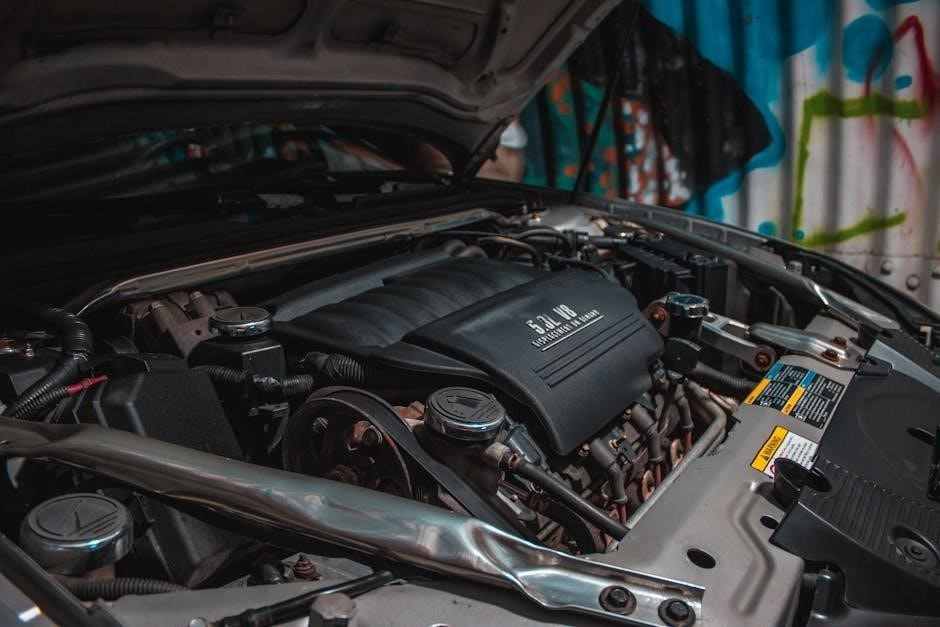
Engine manuals, like those available on eBay (MS-0635-11-98), detail the intricate parts – from the cylinder to the fuel system – crucial for operation.
Cylinder and Piston Assembly
The cylinder, a foundational component, houses the piston within the Briggs & Stratton 17.5 HP engine. Detailed parts manuals, such as the one referenced as MS-0635-11-98, illustrate the precise arrangement and specifications of these parts. Understanding this assembly is vital for both maintenance and repair procedures.
The piston’s reciprocating motion, guided within the cylinder, converts combustion pressure into mechanical energy. Manuals provide exploded views, aiding in identifying each component – piston rings, connecting pin, and the cylinder itself. Proper piston ring seating ensures optimal compression, directly impacting engine performance. Careful inspection, guided by the manual, reveals wear or damage requiring replacement. Accurate reassembly, following the manual’s instructions, is paramount for reliable engine operation.
Connecting Rod and Crankshaft
The connecting rod serves as the crucial link between the piston and the crankshaft within the Briggs & Stratton 17.5 HP engine. Parts manuals, like MS-0635-11-98, detail its construction and relationship to other components. This rod transmits the piston’s linear motion into the rotational force of the crankshaft.
The crankshaft, a central rotating shaft, converts this reciprocating motion into usable power. Manuals showcase the crankshaft’s bearings, counterweights, and oil passages. Inspecting these components for wear or damage is essential during overhaul. Proper bearing clearance, as specified in the manual, ensures smooth operation and prevents premature failure. Accurate alignment and torque specifications, found within the manual, are vital during reassembly for optimal engine performance.

Valve Train System
The valve train system meticulously controls the intake of air-fuel mixture and the exhaust of combustion gases in the Briggs & Stratton 17.5 HP engine. Detailed parts manuals, such as MS-0635-11-98, illustrate the components: valves, valve springs, rocker arms, and camshaft. Proper valve timing, dictated by the camshaft, is critical for efficient engine operation.
Manuals emphasize checking valve clearances to ensure optimal performance. Incorrect clearances can lead to reduced power, overheating, or even engine damage. Inspection for worn valve guides, seats, and faces is also crucial during maintenance. Understanding the valve train’s interaction, as outlined in the manual, is key to diagnosing and resolving performance issues effectively.
Carburetor and Fuel System
The carburetor is central to the Briggs & Stratton 17.5 HP engine’s fuel system, mixing air and fuel for combustion. Engine manuals, like the referenced MS-0635-11-98, detail its components – float, jets, and throttle. Maintaining a clean fuel system is paramount; fuel filters prevent debris from reaching the carburetor.
Manuals guide carburetor adjustment for optimal engine performance, addressing issues like rough idling or stalling. They also highlight the importance of fresh fuel and proper fuel line connections. Understanding the fuel system’s operation, as illustrated in the diagrams, enables effective troubleshooting and ensures reliable engine operation. Regular inspection and cleaning are vital.
Ignition System
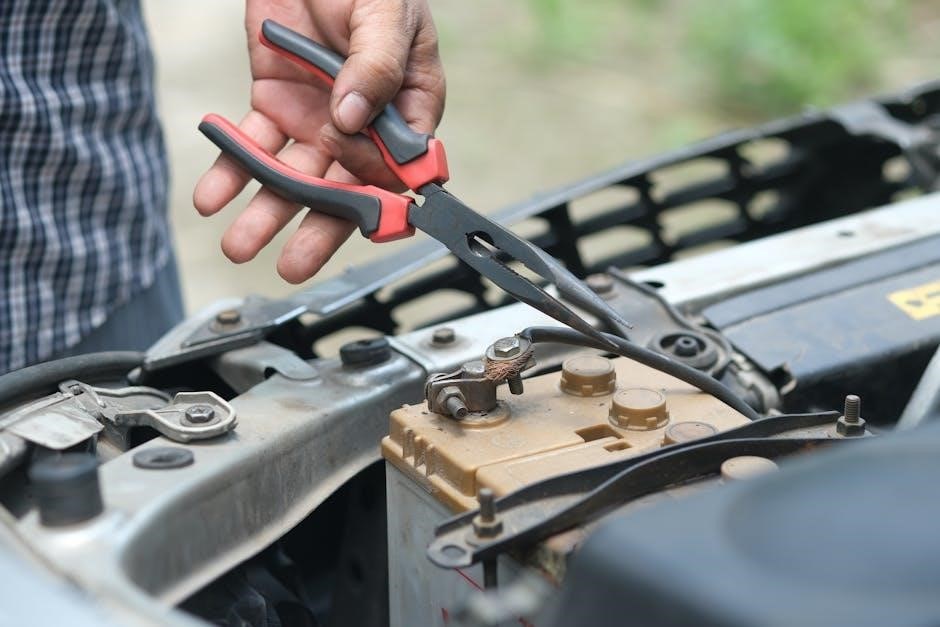
The ignition system initiates combustion in the Briggs & Stratton 17.5 HP engine. Manuals, such as the MS-0635-11-98 parts manual, illustrate components like the magneto and spark plug. Proper spark plug maintenance – inspection and replacement – is crucial for reliable starting and efficient running. These manuals detail the correct spark plug gap and type.
Troubleshooting ignition issues often involves checking the magneto’s air gap and the spark plug’s condition. A weak or absent spark can cause starting problems or poor performance. Diagrams within the manual aid in understanding the system’s wiring and operation. Consistent maintenance, guided by the manual, ensures optimal ignition performance.
Governor System
The governor system within the Briggs & Stratton 17.5 HP engine maintains consistent engine speed under varying loads. Detailed diagrams in manuals, like the MS-0635-11-98, illustrate the mechanical linkage and components. This system prevents engine over-speeding and ensures stable operation. Understanding its function is vital for proper engine performance.
Troubleshooting governor issues often involves checking for binding linkages or a faulty governor spring. The engine manual provides guidance on adjusting the governor to achieve the correct engine speed. Proper governor function is essential for equipment safety and longevity. Regular inspection, as outlined in the manual, is recommended.
Cooling System (Fan and Blower Housing)
The cooling system, comprised of a fan and blower housing, is crucial for preventing overheating in the Briggs & Stratton 17.5 HP engine. Engine manuals, such as MS-0635-11-98, detail the airflow path and component locations. This system directs air over the cylinder fins, dissipating heat generated during combustion. Maintaining a clean cooling system is paramount for reliable operation.
Regular inspection of the fan blades and blower housing for debris is recommended. Obstructions can restrict airflow and lead to elevated engine temperatures. The manual provides instructions for cleaning and ensuring proper fan operation. A functioning cooling system directly impacts engine lifespan and performance.
Oil System (Oil Pump and Filter)
The oil system within the Briggs & Stratton 17.5 HP engine is vital for lubrication and cooling internal components. Engine manuals, like the referenced MS-0635-11-98, illustrate the oil pump’s function – circulating oil to critical areas. An oil filter removes contaminants, ensuring clean oil reaches these parts, minimizing wear and tear.
Proper oil levels and regular oil changes, detailed in the manual, are essential for longevity. The manual specifies oil type and capacity. Ignoring oil maintenance can lead to significant engine damage. Understanding the oil system’s layout, as shown in diagrams, aids in troubleshooting and repair procedures.
Maintenance Procedures
Regular upkeep, guided by the Briggs & Stratton manual (e.g., MS-0635-11-98), includes oil changes, filter replacements, and spark plug checks for optimal performance.
Oil Change Procedure
Following the Briggs & Stratton manual is essential for a successful oil change. Begin with a warm, but not hot, engine. Locate the oil drain plug, typically at the bottom of the engine, and position a suitable oil drain pan underneath. Carefully remove the plug, allowing the old oil to completely drain.
Consult your manual for the correct oil type and quantity – crucial for the 17.5 HP engine’s longevity. Once drained, reinstall the plug securely. Remove the oil fill cap and slowly pour in the new oil, checking the dipstick frequently to avoid overfilling. Finally, start the engine briefly to circulate the oil, then recheck the level. Proper disposal of used oil is vital for environmental responsibility.
Air Filter Cleaning and Replacement
Referencing the Briggs & Stratton 17.5 HP engine manual is key for proper air filter maintenance. Locate the air filter housing, usually on top or side of the engine. Remove the cover and inspect the filter for dirt and debris. Foam filters can often be washed gently with soap and water, ensuring they are completely dry before reinstallation.
Paper filters generally require replacement. A clean air filter ensures optimal engine performance and prevents damage. Consult the manual for the correct filter type and replacement intervals. Reassemble the housing securely, ensuring a tight seal to prevent unfiltered air from entering the engine. Regular checks, as outlined in the manual, are crucial.
Spark Plug Inspection and Replacement
The Briggs & Stratton 17.5 HP engine manual details spark plug maintenance. Begin by disconnecting the spark plug wire for safety. Remove the spark plug using a socket wrench, noting its condition. Inspect the electrode for wear, fouling, or damage. A properly functioning spark plug is vital for efficient combustion.
If the plug is worn or fouled, replace it with a new one of the correct type, specified in the manual. Gap the new plug to the manufacturer’s recommended setting using a spark plug gapping tool. Reinstall the plug, tightening it to the specified torque. Reconnect the spark plug wire securely. Regular inspection, guided by the manual, ensures reliable starting and performance.
Fuel Filter Replacement
The Briggs & Stratton 17.5 HP engine manual emphasizes the importance of a clean fuel system. Locate the fuel filter, typically in the fuel line between the tank and carburetor. Before removal, relieve fuel system pressure to prevent spills. Disconnect the fuel lines from the filter, noting their orientation for correct reassembly.
Remove the old filter and install a new one, ensuring it’s securely seated. Reconnect the fuel lines, verifying a tight seal to prevent leaks. The manual will specify the correct filter type. Regular fuel filter replacement, as outlined in the manual, prevents debris from reaching the carburetor, ensuring optimal engine performance and longevity.
Carburetor Adjustment
The Briggs & Stratton 17.5 HP engine manual details carburetor adjustments for optimal performance. Typically, adjustments involve the idle speed screw and mixture control screw. Begin by warming up the engine. Consult the manual for specific screw locations and factory settings. Adjust the idle speed screw to achieve the desired RPM, usually around 1750-2000.
Fine-tune the mixture screw for smooth acceleration and no black smoke. Improper adjustment can lead to poor fuel economy or engine damage. The manual stresses caution, as incorrect settings can negatively impact emissions and engine life. Refer to diagrams within the manual for precise guidance.

Troubleshooting Common Issues
The Briggs & Stratton 17.5 HP manual aids in diagnosing problems like starting failures, rough running, or overheating, offering solutions for common engine faults;
Engine Won’t Start
If your Briggs & Stratton 17.5 HP engine fails to start, the manual emphasizes several key checks. First, verify fuel supply – is the tank full and the fuel fresh? A clogged fuel filter, addressed in the maintenance section, could be the culprit.
Next, inspect the spark plug; a fouled or damaged plug won’t ignite the fuel-air mixture. The manual details spark plug inspection and replacement procedures. Confirm the ignition system is functioning correctly.
Low compression, potentially due to worn piston rings, can also prevent starting. Finally, ensure the safety interlocks are engaged correctly, as these can disable the engine. Refer to the manual’s diagrams for precise component locations and testing procedures.
Engine Runs Rough
A rough-running Briggs & Stratton 17.5 HP engine often indicates an issue with the fuel-air mixture or ignition. The manual highlights carburetor adjustment as a primary troubleshooting step. A dirty or improperly adjusted carburetor can disrupt the fuel flow, causing erratic performance.
Inspect the air filter; a restricted air filter limits airflow, creating a rich mixture. Refer to the manual for cleaning and replacement instructions. Check the spark plug for fouling or damage, as a weak spark leads to incomplete combustion.
Valve issues, though less common, can also cause rough running. The manual provides guidance on valve train inspection. Ensure all connections are secure and free from leaks.
Engine Overheats
Overheating in a Briggs & Stratton 17.5 HP engine is a serious concern, potentially causing significant damage. The engine manual stresses the importance of the cooling system – specifically the fan and blower housing. Ensure these components are clean and free of obstructions, allowing adequate airflow.
Low oil levels are a frequent cause of overheating; always verify the oil level before operation and adhere to the manual’s recommended oil change schedule. A malfunctioning governor can also contribute, causing the engine to run at excessively high speeds.
Inspect the cylinder head and cooling fins for debris. Proper ventilation is crucial; avoid operating the engine in confined spaces.
Low Oil Pressure
Low oil pressure in your Briggs & Stratton 17.5 HP engine, as detailed in the engine manual, demands immediate attention. This often indicates a problem within the oil system – the oil pump or filter being primary suspects. A clogged oil filter restricts flow, while a failing oil pump cannot circulate oil effectively.
Check the oil level first; a simple deficiency is a common cause. Inspect for oil leaks, which reduce overall oil volume. The manual emphasizes using the correct oil type and viscosity for optimal performance.

Severe, prolonged low oil pressure can lead to catastrophic engine failure, so prompt diagnosis and repair are vital.
Parts Manual and Diagrams
Locating parts diagrams online, or within manuals like MS-0635-11-98, is essential for repairs. Understanding parts numbers ensures correct replacement components are sourced.
Locating Parts Diagrams Online
Finding accurate parts diagrams for your Briggs & Stratton 17.5 HP engine is now remarkably accessible thanks to the internet. Several websites specialize in small engine parts and offer exploded views detailing every component. A valuable resource is searching for manuals like the MS-0635-11-98 parts manual online; often, these are available as downloadable PDFs.
Briggs & Stratton’s official website also provides a parts lookup tool, allowing you to input your engine model number (e.g., 31G700) to pinpoint the correct diagrams. These diagrams are invaluable for identifying parts, understanding assembly, and planning repairs. Remember to verify the diagram matches your specific engine series to avoid ordering incorrect components. Utilizing these online resources streamlines the repair process and ensures you have the necessary visual aids.
Understanding Parts Numbers
Briggs & Stratton parts numbers are crucial for ordering the correct replacement components for your 17.5 HP engine. These numbers, detailed in parts manuals like MS-0635-11-98, are unique identifiers for each part, ensuring compatibility. They typically consist of numbers and sometimes letters, specifying the exact item needed.
When referencing diagrams, carefully note the part number associated with each component. Cross-referencing this number with online retailers or parts suppliers guarantees you receive the right part. Incorrect numbers can lead to delays and frustration. Always double-check the number before finalizing your order, and consult the manual if unsure. Accurate part numbers are key to successful engine repairs.
Resources for Purchasing Replacement Parts
Finding replacement parts for your Briggs & Stratton 17.5 HP engine is readily achievable through various channels. Online retailers frequently stock a wide array of components, often allowing searches by model number or specific part numbers found in manuals like MS-0635-11-98.
Local small engine repair shops are also excellent resources, offering expertise and immediate availability of common parts. Additionally, Briggs & Stratton’s official website provides a parts locator tool. Comparing prices across different suppliers is recommended to secure the best deal. Ensure the vendor is reputable to guarantee part quality and authenticity for optimal engine performance.

Engine Repair and Overhaul
Detailed repair, including disassembly procedures, is often outlined in comprehensive manuals like the 42A700-42A799 series parts manual, aiding overhaul efforts.
Disassembly Procedures
Before commencing disassembly of your Briggs & Stratton 17.5 HP engine, consulting a dedicated manual – such as those available on eBay (e.g., MS-0635-11-98) – is paramount. These resources provide step-by-step instructions, ensuring a systematic approach.
Begin by disconnecting the spark plug and fuel line, then carefully remove the cooling system components. Document each step with photos for reassembly. The manual will detail the correct sequence for removing the carburetor, governor, and valve train. Pay close attention to torque specifications when loosening bolts to avoid damaging threads. Proper organization of parts is crucial, and referencing the parts diagrams (found online) will prove invaluable throughout the process.
Inspection and Measurement
Following disassembly, a thorough inspection, guided by a Briggs & Stratton 17.5 HP engine manual, is essential. Examine the cylinder bore for scoring or wear, utilizing precision measuring tools like micrometers and bore gauges. Inspect the piston for cracks or damage, and verify its diameter against the manual’s specifications.
Check the connecting rod for bending and the crankshaft for journal wear. Valve inspection should focus on seating and stem condition. A manual (like MS-0635-11-98) provides acceptable wear limits. Accurate measurements are critical; deviations indicate the need for component replacement to ensure optimal engine performance and longevity.
Reassembly Procedures
Reassembly demands strict adherence to a Briggs & Stratton 17.5 HP engine manual’s torque specifications. Begin with the crankshaft and connecting rod, ensuring proper bearing lubrication. Carefully install the piston and rings, utilizing a ring compressor. Valve train components require precise timing, referencing the manual’s diagrams.
The cylinder head must be installed with a new gasket, torqued in the specified sequence. Proper carburetor and ignition system installation is crucial for starting and running. A parts manual (like MS-0635-11-98) aids in correct component placement. Double-check all connections before final assembly, guaranteeing a reliable rebuild.